Addiction Treatment in Texas: Individualized Nourishment Strategies in Healing
People seldom concerned treatment eating well. By the time someone gets to detoxification or begins outpatient care, their body has been operating on adrenaline, caffeine, and whatever they might grab in between crises. Rest is spread. Dishes are missed. Junk food loads spaces. That photo is common throughout Texas, from the Hill Nation to Houston's Loophole. It is equally as real in addiction treatment in San Antonio, where clients often manage job, family members, and website traffic while attempting to remain sober.
Nutrition is not a side task in recovery. It forms mood, sleep, power, inflammation, intestine wellness, and the body's ability to recover. The right plan makes medicines function much better, supports blood sugar level to blunt cravings, and stops difficulties like refeeding disorder early in detox. Basically, food is both structure and lever.
What individualized nourishment contributes to addiction care
A common handout regarding "well balanced consuming" does not repair hypoglycemia from stimulant binges, nor does it rebuild thiamine shops depleted by heavy alcohol usage. Personalized nourishment means we take a look at the specific substance background, withdrawal account, medical comorbidities, budget plan, culture, and kitchen access. In Texas, that may imply developing a high-protein, high-fiber strategy built around tortillas de maíz, smoked fajita meat, pinto beans, and nopales for a San Antonio resident living with his mother, while a ranch hand in the Panhandle needs shelf-stable alternatives he can pack in a cooler.
Programs that make nourishment part of addiction treatment see much better retention. When customers really feel less shaky, rest even more deeply, and quit riding the blood sugar roller rollercoaster, it is much easier to make therapy, show up for conferences, and endure drug adjustments. The objective is not to transform a person right into a nourishment perfectionist. It is to eliminate a collection of physiological barriers that or else compel consistent white-knuckling.
Substance impacts that matter nutritionally
You do not require an encyclopedia to tailor a strategy. You do need to know what each compound has a tendency to do to cravings, body organ systems, and micronutrients.
Alcohol
Chronic alcohol usage impairs absorption of thiamine, folate, and other B vitamins. It inflames the digestive tract cellular lining and the pancreas, and it overworks the liver. Reduced thiamine increases the threat of Wernicke's encephalopathy. In early recovery, glucose swings can really feel extreme, and food cravings often piggyback on those dips. Many clients additionally have fatty liver, hepatitis, or early cirrhosis, plus sarcopenia from years of low healthy protein intake.
Nutrition focus: aggressive thiamine repletion per medical support, normally 100 mg day-to-day by mouth after IV or IM loading in greater danger instances, plus folate, magnesium, and a full-spectrum multivitamin. Healthy protein needs to suffice to high, normally 1.2 to 1.5 grams per kilogram daily unless there is refractory hepatic encephalopathy, where timing and sort of protein issue more than limitation. Facility carbs and a going to bed snack minimize over night hypoglycemia. Salt might need to be restricted for ascites.
Stimulants, consisting of methamphetamine and cocaine
Stimulants suppress cravings, interrupt sleep, and increase energy expenditure. Clients typically turn up undernourished and dehydrated, with dental concerns that make eating unpleasant. Withdrawal brings crushing fatigue, low mood, and ravenous cravings, especially for sugary foods. Micronutrient shortages differ yet frequently consist of magnesium, zinc, and vitamin D.
Nutrition emphasis: re-establish meal rhythm rapidly. Go for 3 meals and one to two snacks within the very first week. Front-load protein at breakfast to stable mid-morning energy. Select softer healthy proteins when teeth is poor, like Greek yogurt, clambered eggs, tuna salad on soft tortillas, and beans. Hydration should be willful, frequently 2 to 3 liters daily across water, milk, and electrolyte beverages as needed.
Opioids
Constipation, reduced digestive tract motility, and dysbiosis are trademarks. Many customers under consume fiber for anxiety of discomfort, which intensifies the trouble. Nausea or vomiting and low hunger can remain with induction on buprenorphine or methadone. Some create weight gain over months, partly from wonderful cravings utilized to self-soothe.
Nutrition focus: titrate fiber very carefully, starting around 10 to 15 grams per day and structure to 25 to 38 grams as endured. Hydration needs to keep pace with fiber. Highlight fermented foods when culturally appropriate, like yogurt or kefir. Magnesium-rich foods can help, and motion after meals is underrated medication for the gut.
Benzodiazepines
During taper or very early discontinuation, queasiness, appetite modifications, and sleep disturbance are common. Blood sugar instability magnifies anxiousness and tremor.
Nutrition focus: small, regular dishes, foreseeable complicated carbs, steady healthy protein, and mild flavors. High levels of caffeine frequently needs to be cut down. Magnesium and B vitamins may sustain total healing, although dosing should be directed clinically.
Cannabis
Cannabis can drive overindulging, but long-lasting heavy usage is also linked to cyclic vomiting in some. In recovery, hunger may dip temporarily.
Nutrition emphasis: dull, hydrating foods throughout any kind of vomiting episodes, then a go back to regular timing and equilibrium. When hyperemesis is presumed, that needs clinical evaluation and cessation.
Polysubstance use
Most customers make use of greater than one substance. Combine approaches, and remember that refeeding syndrome can develop in drastically malnourished clients of any kind of compound kind. In detoxification and early residential phases, medical professionals keep an eye on phosphorus, magnesium, and potassium and ramp calories gradually if threat is high.
The process of an individualized plan in Texas programs
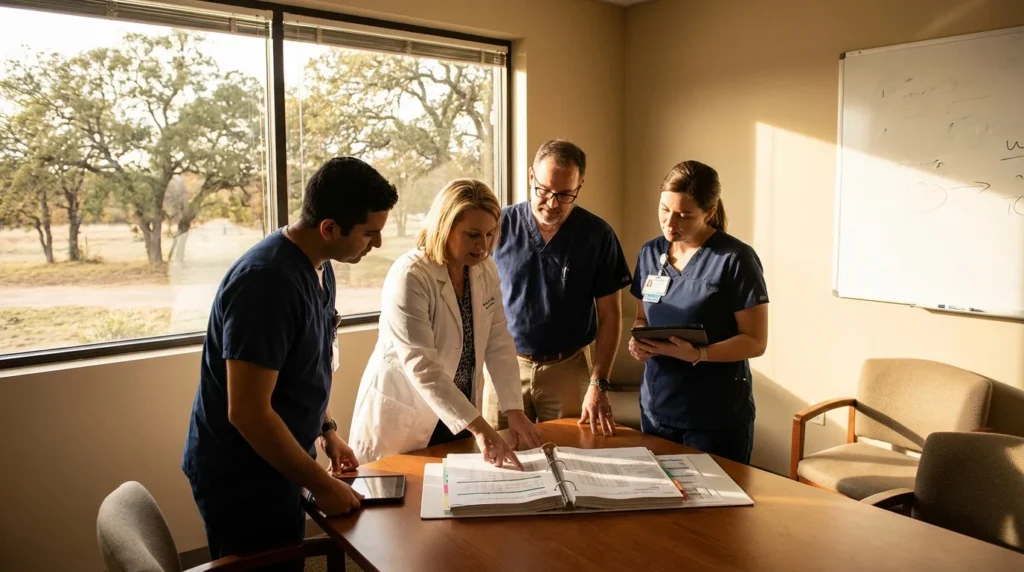
A dietitian or experienced clinician starts with an organized consumption. In my collaborate with Addiction treatment texas groups, the most efficient analyses do four things promptly: define threat, capture the client's real food globe, map medical constraints, and established one to two high-yield actions targets.
Here is a streamlined version of what reliable programs use throughout week one:
- Triage risk: current weight modification, BMI trend, signs of malnutrition, teeth, throwing up or diarrhea, and possible refeeding risk.
- Lab evaluation: CMP, CBC, magnesium, phosphorus, thiamine if readily available, folate, vitamin D, iron panel, HbA1c, lipids, and inflammatory markers when indicated.
- Context check: spending plan, kitchen access, cooking equipment, refrigerator room, transportation, job schedule, and social or religious food patterns.
- Medication map: MAT representatives like buprenorphine or methadone, naltrexone's result on cravings, SSRIs or SNRIs, anticonvulsants, and communications that may impact appetite or weight.
This front-loaded strategy prevents guesswork. In addiction treatment in San Antonio, where lots of clients shop at H‑E‑B and Culebra Meat Market, counselors who can talk aisle numbers and regular advertisements develop trust fund fast. "Get the two-pound bag of frozen blended vegetables, not the steam-in-bag songs" sounds tiny, but it appreciates cost realities.
Translating the information right into meals that work
Nutrition is technological on the backside, easy on the front. Customers require strategies that suit their day without continuous measuring.
Protein: Many recuperating adults take advantage of 1.2 to 1.6 grams per kilo of body weight daily, particularly if there is muscle mass loss. Spread consumption across dishes, 25 to 40 grams each time, to support muscle healthy protein synthesis. In Texas, that can be smoked chicken fajitas, carne asada, black beans, cottage cheese with fruit, eggs with spinach, or a morning meal taco with extra egg whites.
Carbohydrates: Support complicated carbs with fiber. Tortillas de maíz, wild rice, steel-cut oats, sweet potatoes, and pinto beans are workhorses. Early recovery often asks for a small night snack with healthy protein and complex carbohydrates to moisten over night hypoglycemia. If someone is insulin resistant or has diabetic issues, a signed up dietitian can set carbohydrate targets per dish, commonly a constant range such as 30 to 60 grams, adapted to medications and glucose data.
Fats: Include monounsaturated and omega‑3 fats. Avocado, olive oil, pecans, and fatty fish like salmon or Gulf-caught choices supply satiation and lower inflammation. For any individual with pancreatic deficiency, dietary fat may require to be regulated or paired with pancreatic enzymes.
Fiber: Gradual development to 25 to 38 grams daily sustains bowel health and wellness, satiety, and the microbiome. In opioid healing, start sluggish to prevent discomfort, and always pair with fluids.
Micronutrients: Thiamine, folate, B12, magnesium, zinc, and vitamin D frequently run reduced. Thiamine is nonnegotiable in anybody with significant alcohol background. Magnesium in food kind originates from beans, nuts, seeds, and eco-friendlies. Vitamin D requires vary by sun exposure and standard labs; food resources aid, yet several customers need supplementation.
Hydration: A useful target is 2 to 3 liters of total fluids daily, personalized for body size, environment, and medical standing. South Texas summers will elevate the requirement. Water is suitable. Coffee can stay, but restriction to one to 2 cups if anxiousness is an issue, and prevent energy drinks that spike and crash.
A day of consuming, Texas style
For many customers, lahacienda.com a photo helps greater than a prescription. Here is how a high-protein, high-fiber day could look utilizing acquainted, cost effective foods.
Morning begins with a morning meal taco on two corn tortillas, full of clambered eggs, sautéed peppers and onions, a spoon of black beans, and a spray of queso fresco. Add a side of sliced up orange and a glass of water or milk. This delivers healthy protein, fiber, and intricate carbs without a sugar rush.
Mid-morning snack may be Greek yogurt with cinnamon and a handful of pecans. Easy to pack, easy on the stomach.
Lunch can be a bowl constructed from brown rice, barbequed hen or fajita steak, pinto beans, pico de gallo, shredded lettuce, and a drizzle of olive oil and lime. If eating is tough, swap steak for shredded chicken. A piece of fruit rounds it out.
Afternoon snack could be hummus with baby carrots and cucumber pieces, or a tuna salad made with olive oil mayo on a soft entire wheat tortilla.
Dinner fits the household table. Smoked salmon or tilapia with a side of calabacitas, a cozy tortilla, and a little baked wonderful potato checks the boxes. Add an easy cabbage slaw dressed with lime. For those staying clear of fish, lean brisket works, yet portion control matters. A going to bed treat of cottage cheese with pineapple or a little dish of oatmeal smooths over night glucose.
No factors, no tech, simply a rhythm that soothes biology.
Tailoring to clinical complications
It prevails to see clients sign up with overlapping problems. A couple of patterns show up often, and each has clear nourishment pivots.
Liver illness: Old guidance limited protein boldy in cirrhosis. That intensified muscle loss and end results. Existing practice leans to 1.2 to 1.5 grams per kg of healthy protein, with focus on plant and dairy products resources and late evening treats abundant in intricate carbohydrates to stop overnight fasting anxiety. Salt restriction assists ascites. If hepatic encephalopathy is active, work closely with the medical professional on lactulose and rifaximin while harmonizing protein sources.
Pancreatitis: Throughout flares, a low-fat, boring strategy is much better tolerated, occasionally advancing from liquids as led by the treatment group. In between flares, moderate fat, stay clear of heavy alcohol triggers, and consider pancreatic enzyme replacement. Small, regular meals minimize pain risk.
Diabetes and prediabetes: Set constant carbohydrate varies per meal, pair carbs with healthy protein and fat, and enjoy liquid sugars. Many clients get here alcohol consumption soft drink, power beverages, or aguas frescas loaded with sugar. Changing to diet variations or water with lime can go down day-to-day sugar by numerous grams. Integrate changes with medicine modifications to stay clear of hypoglycemia in early soberness when cravings waxes and wanes.
GI distress and constipation: Opioid recuperation requires a modern fiber ladder, hydration, and activity. Ground flax, chia, beans, and fruits like kiwi are useful tools. Probiotic foods might aid, yet high-dose supplements can backfire in sensitive guts.
Pregnancy: When someone gets in therapy expecting, include obstetrics and a dietitian right away. Thiamine, folate, iron, and iodine take center stage, and nausea or vomiting administration becomes an everyday task. Weight targets need to be individualized.
Medications for addiction treatment and appetite
Medication assisted treatment alters the food landscape. Buprenorphine often tends to normalize cravings as withdrawal reduces. Methadone may increase yearnings for desserts gradually. Extended-release naltrexone can blunt reward from eating, contributing to very early weight management in some, then later stablizing. Antidepressants, anticonvulsants, and antipsychotics can add weight quickly. Plans that assume weight will certainly simply sort itself out typically finish in frustration.
A limited loop between prescriber, therapist, and dietitian permits early course adjustment. If weight climbs up 5 to 10 extra pounds in the very first two months, introduce mild calorie recognition, not strict dieting. Include a walk after dinner, push healthy protein up, and swap sugar-sweetened beverages for alternatives. If appetite is too low, develop power thickness with smoothies, entire milk yogurt, and nut butters until the medicine program settles.
Food accessibility and spending plans in Texas
You can not execute a strategy without food. Texas is large, and accessibility ranges widely.
Urban clients in San Antonio, Dallas, and Houston often patronize H‑E‑B, Carnival, Walmart, or neighborhood mercados. The regular bargains are solid, and icy vegetables, canned beans, store-brand Greek yogurt, and family members packs of poultry upper legs are cost pleasant. The San Antonio Food Financial institution runs distribution centers and cooking programs that assist with both staples and abilities. Several outpatient programs keep a short list of neighboring cupboards and meal services, which matters throughout week one when clients are least organized.
Rural clients face distance and time prices. Shelf-stable healthy protein like canned tuna, poultry, beans, and powdered milk bridges voids. If someone spends ten hours a day on a tractor or in a truck, they require a cooler, cold pack, and foods that endure heat. Flour tortillas, peanut butter, jerky, apples, and shelf-stable hummus mugs beat gas station breads. Telehealth nourishment sees can fill training spaces when driving 2 hours to a clinic is not feasible.
SNAP and WIC rules deserve recognizing. Lots of clients get SNAP within one month if they register during treatment, particularly if job is cut off. Staff who can help with applications often transform a client's month from deficiency to stability.
Cravings, blood sugar, and the myth of willpower
Cravings do not come from a vacuum. For several, they increase when blood sugar goes down or after a poor evening's sleep. By establishing anchors at morning meal, lunch, dinner, and a healthy protein rich treat, you minimize the amplitude of those swings. In method, the 3 pm hour is the danger zone. A planned snack at 2:30 pm, plus water, cuts regression risk greater than pep talks.
A couple of functional levers frequently outperform motivation. Keep cut vegetables and fruit at eye level in the fridge. Load a clear pitcher with water and lime on the counter. Load tomorrow's snacks while cleansing supper meals. These are easy friction cleaners. In team therapy, ask clients to report the moment of their greatest desire alongside what they ate in the previous six hours. Patterns emerge fast.
Building habits that make it through actual life
Early healing is vulnerable. The strategy needs to service court days, dual shifts, and Saturdays at a nephew's birthday celebration. Overcommitting eliminates adherence. A two action construct tends to stick better than a 5 action overhaul.
Use this brief series during the first 14 days:
- Set a morning meal support within two hours of waking that consists of at least 20 grams of healthy protein. Make it repeatable, like egg and bean tacos or Greek yogurt with fruit and granola.
- Add one intended mid-day treat with healthy protein and fiber, and consume a complete glass of water with it.
Everything else can wait. When these two anchors hold, layer in a supper fine-tune or a hydration target. Self-confidence grows when appetite loosen up and rest deepens.
How residential and outpatient settings carry out nutrition
Residential programs in Texas typically have a lot more control over dishes. The opportunity, and the risk, is institutional food. Customers gain from menus that turn regionally familiar dishes, not generic covered dishes. In San Antonio centers, we have had success serving lean carne guisada with whole wheat tortillas, hen tortilla soup packed with veggies, and build-your-own morning meal tacos on Sundays. Cooking teams enhance skills and offer customers dishes they can actually afford.
Outpatient treatment counts on training and accountability. In addiction treatment in San Antonio, several programs now schedule a short dietitian touchpoint at intake, week 2, and week six. Those 20 min visits are not talks. They are troubleshooting sessions: what did you actually buy, what did you run out of, what derailed the strategy. Customers that share photos of their fridge or receipts get customized responses rather than platitudes.
Progress tracking without obsession
Data helps when it is humane. Weekly weight checks, waistline measurements every two to 4 weeks, and a brief set of questions on energy, rest, bowel routines, and food cravings tell the story much better than calorie matters. Labs can be repeated at 8 to 12 weeks when there were shortages. For clients with diabetes mellitus or prediabetes, constant sugar surveillance during the first month can be a revelation, but it should be framed as an understanding tool, not a surveillance device.
Expect plateaus. When they occur, ask about the previous week's sleep, stress, and routine before transforming food. Nutrition does not operate in a vacuum.
Common risks and training course corrections
Perfection plans collapse. If a client insists on removing all sugar, all bread, and all red meat in week one, I have found out to grin and reroute. Maintain one reward in the plan, after that update it gradually. Swap pan dulce 3 days a week for a smaller sized part and add a protein companion. Change soda with a diet plan variation for a month prior to pressing water fully.
The meal prep dream additionally journeys individuals up. Not everybody can prepare four meals on Sunday. Start with batch healthy proteins, like barbecuing a pack of hen thighs and preparing a pot of pinto beans. Match them with fast carbohydrates and veggies the remainder of the week. For individuals without a full cooking area, a microwave, rice stove, and electrical frying pan can cover 90 percent of meals.
Beware of energy beverages impersonating as hydration. They spike adrenaline, fuel anxiousness, and wreckage rest. If a client will certainly not stop chilly turkey, taper to one little can in the past midday, after that swap to unsweet tea or water.
Integrating society and preference
Food is identity. Plans that neglect society backfire. In Texas, that implies working with barbacoa on Sundays, tamales throughout vacations, and brisket at household events. The technique is section, frequency, and plate balance, not bans. 2 breakfast tacos with eggs and beans beat 3 with chorizo and cheese. At a barbeque, fill half the plate with slaw and charro beans, then include a practical piece of brisket and a tortilla. Clients stick with strategies that seem like home.
Language matters also. Informing a grandmother to prepare quinoa when she has actually made arroz her whole life is tone deaf. Brown rice or a mix of brownish and white is progress. Beans stay the most economical superfood in the Texas pantry.
A note on children and families
Many grownups in therapy feed children. House changes surge. When the moms and dad prepares a fruit bowl at eye degree, the child's snack modifications as well. Keep kid friendly healthy proteins in reach, like string, yogurt tubes, and peanut butter packages. If food instability exists, companion with college meal programs and regional food financial institutions. The San Antonio Food Bank's Culinary Health Education and learning for Families program is one example of ability structure that sticks.
Where individualized strategies fit into the bigger healing arc
Addiction therapy is staged. In detox and stablizing, focus on security, hydration, thiamine, electrolytes, and gentle dishes. In very early outpatient, lock down both supports that tame cravings and reestablish rest. In months two to six, develop stamina and endurance with protein targets and dynamic task. After month 6, improve body structure and long-term illness prevention. Nourishment does not require to be best at any kind of stage, just straightened with the job at hand.
When programs across Texas embrace this staged method, they decrease hospital readmissions for electrolyte derangements, cut dropout from power collisions, and give customers a bar they can draw daily. Individualized nourishment strategies do not cure addiction. They get rid of a set of preventable headwinds.
If you are running a clinic, fold up a registered dietitian right into your team rounds. If you are a client, ask your therapist to attach you with nutrition support, also for a couple of brows through. And if you remain in addiction treatment in San Antonio, utilize what the city already supplies: H‑E‑B dietitian services in pick shops, the San Antonio Food Bank, and area facilities that couple behavioral health and wellness with nutrition. Recuperation in Texas brings sufficient weight. Food ought to lighten the lots, not add to it.